

A Court of Splintered Harmony: The Valkyrie Cycle, Movement I (A Court of Thorns and Roses, 6)
$22.40 (as of September 19, 2026 07:39 GMT +00:00 – More infoProduct prices and availability are accurate as of the date/time indicated and are subject to change. Any price and availability information displayed on [relevant Amazon Site(s), as applicable] at the time of purchase will apply to the purchase of this product.)
The Unselected Journals of Emma M. Lion: Vol. 9
$21.00 (as of September 19, 2026 07:39 GMT +00:00 – More infoProduct prices and availability are accurate as of the date/time indicated and are subject to change. Any price and availability information displayed on [relevant Amazon Site(s), as applicable] at the time of purchase will apply to the purchase of this product.)
Hollow Bones: A Novel
$23.32 (as of September 19, 2026 07:39 GMT +00:00 – More infoProduct prices and availability are accurate as of the date/time indicated and are subject to change. Any price and availability information displayed on [relevant Amazon Site(s), as applicable] at the time of purchase will apply to the purchase of this product.)
The Altar of Pergamon: The Mystery of the Dark Angel and the Future of the World
$21.48 (as of September 19, 2026 07:39 GMT +00:00 – More infoProduct prices and availability are accurate as of the date/time indicated and are subject to change. Any price and availability information displayed on [relevant Amazon Site(s), as applicable] at the time of purchase will apply to the purchase of this product.)
The Nerd Reich: Silicon Valley Fascism and the War on Democracy
$30.00 (as of September 19, 2026 07:39 GMT +00:00 – More infoProduct prices and availability are accurate as of the date/time indicated and are subject to change. Any price and availability information displayed on [relevant Amazon Site(s), as applicable] at the time of purchase will apply to the purchase of this product.)Ruining traditional marketing practices, artificial intelligence (AI) is reshaping the landscape of email marketing, presenting you with both groundbreaking advantages and significant challenges. As you navigate this new frontier, you’ll discover how AI can enhance personalization, improve efficiency, and leverage predictive analytics to engage your audience more effectively. However, it’s crucial to remain vigilant about data privacy and the need for authentic human connections in your communications. This post will guide you through the transformative effects of AI on email marketing and help you weigh its benefits against potential pitfalls.
Key Takeaways:
- Enhanced Personalization: AI allows for highly tailored email campaigns, improving relevance and customer engagement through personalized content and recommendations.
- Improved Efficiency: Automation of repetitive marketing tasks like list segmentation and A/B testing enables marketers to optimize campaigns and focus on strategic initiatives.
- Data Privacy Concerns: The reliance on data for AI-driven marketing raises significant challenges regarding compliance with data privacy regulations, necessitating responsible data handling practices.
- Algorithmic Bias: AI models must be monitored to prevent biases from influencing marketing strategies, ensuring fairness and inclusivity in customer targeting.
- Human Connection: Balancing AI’s efficiency with authentic human interaction is crucial for fostering long-term customer relationships and engagement.
The Role of AI in Email Marketing
Your understanding of email marketing has evolved with the advent of Artificial Intelligence (AI), which integrates advanced algorithms and analytics to enhance your campaigns. AI in email marketing involves using machine learning and data-driven strategies to create personalized, efficient, and targeted email communications that resonate with your audience.
Definition of AI in Email Marketing
To grasp the concept of AI in email marketing, it is necessary to recognize that it entails leveraging artificial intelligence technologies to analyze customer behaviors, preferences, and interactions. This analysis enables you to tailor email content, optimize delivery times, and automate various tasks, resulting in customized experiences for each recipient.
Overview of Current Trends
Role of AI in shaping email marketing trends is becoming increasingly prominent. As marketers strive for greater efficiency and personalization, AI-driven tools are constantly evolving to meet these demands. Industries are witnessing a growing reliance on predictive analytics, automated A/B testing, and real-time campaign optimization, allowing for a substantial increase in engagement rates and overall marketing effectiveness.
With a plethora of tools available at your disposal, AI is setting new standards in email marketing. An increasing number of businesses are implementing AI technologies to enhance customer segmentation and personalize messages at an unprecedented scale. You can expect to see continued advancements that promote data-driven decision-making, improve user interactions, and forge stronger connections between brands and their audiences.
Benefits of AI in Email Marketing
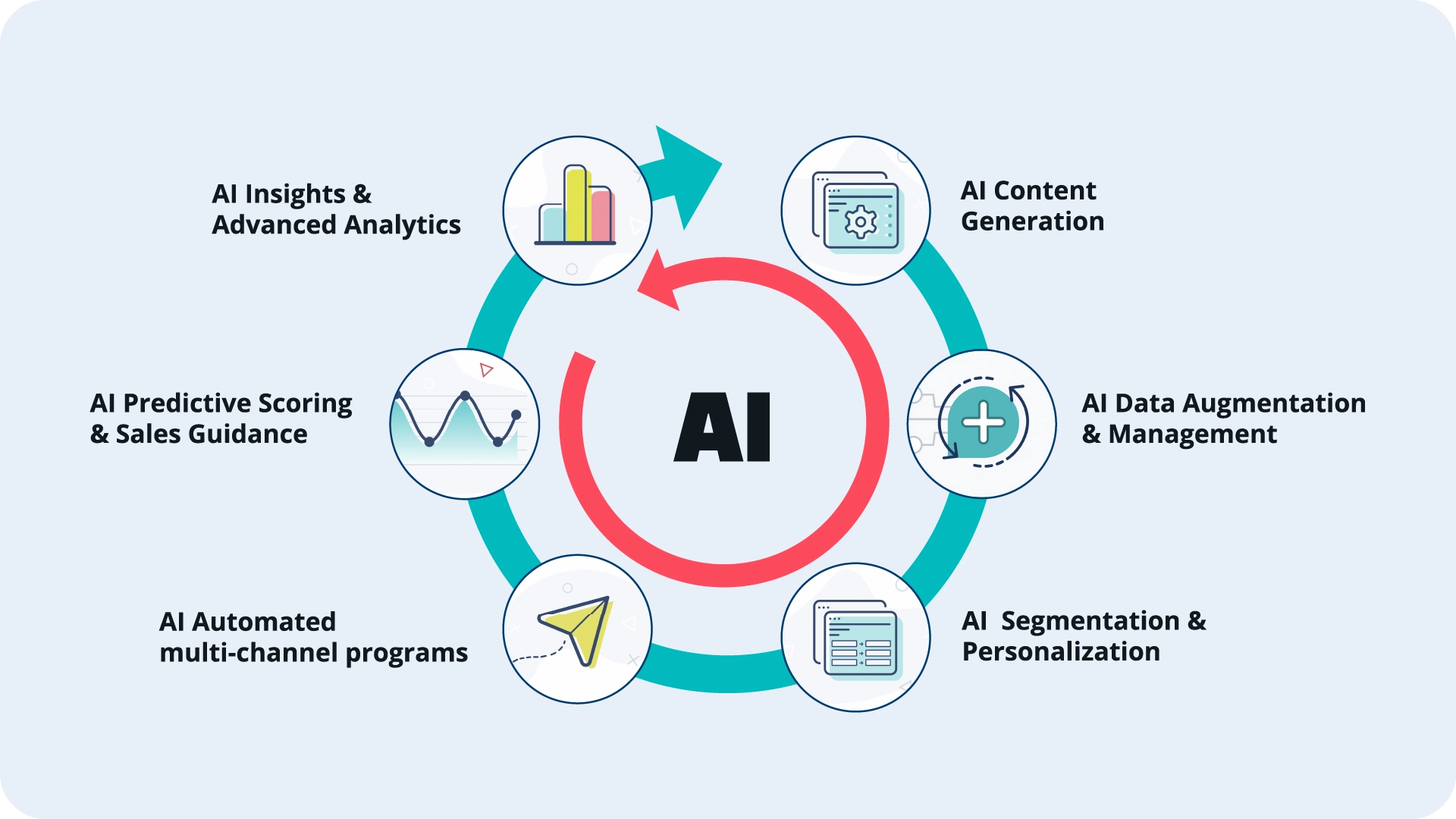
If you’re looking to elevate your email marketing strategy, integrating AI can provide transformative benefits. This technology not only enhances personalization and efficiency but also allows for advanced targeting and optimization, ensuring your communications resonate with your audience and deliver value.
Enhanced Personalization Techniques
Email marketing excels when it is personalized, and AI allows you to tailor content specifically to each recipient. By analyzing user data and behavior, AI crafts subject lines, content, and product recommendations that align with individual preferences, making your emails more relevant and engaging.
Automation and Efficiency Improvements
To optimize your email marketing efforts, embracing AI automation is crucial. This technology streamlines repetitive tasks such as list segmentation, email scheduling, and A/B testing, saving you valuable time and allowing you to focus on crafting strategic campaigns.
Benefits of AI-driven automation extend beyond time savings. With real-time performance data, AI continually adjusts and optimizes your campaigns, ensuring you achieve maximum impact and a strong return on investment. You’ll find yourself more agile in response to market changes, ultimately enhancing your campaign effectiveness.
Predictive Analytics for Targeting
An crucial aspect of successful marketing is accurately predicting customer behavior. AI’s predictive analytics capabilities enable you to forecast preferences based on historical data, allowing for more effective audience segmentation and optimal timing for your emails.
Understanding these insights means you can tailor your communications to fit anticipated behavior, enhancing engagement rates. By knowing the best times and ways to reach your audience, you can cultivate stronger relationships and drive higher conversion rates.
Content Optimization Strategies
For your email campaigns to stand out, analyzing the performance of your content is key. AI can identify which types of content resonate most with different audience segments, leading to continuous optimization and improved effectiveness in your messaging.
Strategies for content optimization involve not just knowing what works but also being agile in adjusting your approach. AI enables dynamic modifications based on real-time data, ensuring your emails are consistently aligned with what your audience wants to see, ultimately driving better results.
Automated Testing and Performance Analysis
Optimization of your email marketing efforts largely depends on effective testing. AI facilitates automated A/B testing of various elements such as templates, subject lines, and images, allowing you to identify the most impactful combinations for your audience.
Techniques utilizing automated testing ensure that your marketing approaches are not only based on assumptions but on solid, data-driven insights. This precision allows you to refine your content continuously, improving engagement and conversion rates as you respond proactively to your audience’s preferences.

Challenges and Ethical Considerations
To fully leverage the benefits of AI in email marketing, you must navigate several challenges and ethical considerations. These issues not only impact your marketing strategy but also shape customer perceptions and trust in your brand.
Data Privacy and Security Issues
Considerations around data privacy are paramount, as AI relies heavily on customer data for personalized marketing. Adhering to regulations like GDPR and CCPA is important for maintaining customer trust and avoiding legal repercussions. You need to implement robust data security measures to protect customer information while leveraging AI capabilities.
Algorithmic Bias and Fairness
Bias is a critical concern when utilizing AI for email marketing. AI models can inadvertently perpetuate biases in their recommendations, reflecting societal inequities related to race, gender, or socioeconomic status. As a marketer, you must be vigilant in addressing these biases to ensure that your campaigns are inclusive and fair.
To mitigate algorithmic bias, you should regularly audit your AI systems to identify potential disparities in how different demographic groups are targeted. Engaging diverse teams in the development process can also help surface blind spots in your AI strategy, ensuring that your email marketing approach promotes equity and fairness across all audience segments.
The Dilemma of Authenticity vs. Automation
Issues surrounding authenticity in customer relationships become prominent when you rely heavily on automation for email marketing. While AI increases efficiency, it can compromise the genuineness of your interactions. Striking the right balance between automated efficiency and human touch is crucial for building lasting customer relationships.
Another point to consider is that while automated messages can provide quick and efficient communications, they often lack the warmth and personal touch that customers value. As you develop your email marketing strategy, you should aim for a blend of AI-driven insights with authentic human engagement to foster deeper connections with your audience.
Managing Customer Expectations
To navigate the complexities of AI in email marketing, you must manage your customers’ expectations regarding the personalization and responsiveness of your campaigns. Clear communication about how you use their data can help build trust and enhance their overall experience with your brand.
This approach involves setting realistic expectations about the level of personalization customers can anticipate. It’s important to inform them how their data is being utilized to improve their experience, reassuring them that their preferences and behaviors are valued in driving your marketing efforts.
Tools and Technologies
Unlike traditional methods, modern AI tools for email marketing leverage advanced algorithms to enhance customer engagement and drive results. These tools offer a wide range of functionalities, from personalization to predictive analytics, ensuring that your campaigns are both effective and efficient.
Overview of Leading AI Tools for Email Marketing
Tools like Mailchimp, HubSpot, and SendinBlue integrate AI features to automate campaign processes, optimize content delivery, and analyze performance metrics. With capabilities such as A/B testing and personalized recommendations, these platforms empower you to create tailored experiences that resonate with your audience, ensuring higher engagement rates and improved ROI.
Integration with Existing Marketing Technologies
Overview of how AI tools seamlessly integrate into your current marketing stack is crucial for maximizing their potential. You can enhance your existing platforms with AI capabilities, allowing for better data analysis and campaign management.
Email marketing platforms now often include API access, enabling you to connect AI functionalities with your Customer Relationship Management (CRM) systems and other digital marketing tools. This integration simplifies data sharing, so you can leverage insights from multiple sources, ultimately allowing you to enhance your targeting strategies and personalize your outreach effectively.
Future Innovations in AI for Email
Overview of future innovations suggests that AI will continue to evolve, introducing even smarter applications that anticipate customer needs more accurately. You can expect tools equipped with enhanced machine learning capabilities to create dynamic, real-time email experiences tailored to individual user behavior.
To stay ahead in the competitive landscape, you should be aware that advancements in natural language processing and sentiment analysis will enable AI to refine communication styles, making your emails feel even more human-like. As these technologies mature, they will play a pivotal role in ensuring your email marketing campaigns remain effective and engaging in an increasingly automated world.

Best Practices for Implementing AI in Email Marketing
Many businesses are beginning to realize the transformative potential of AI in email marketing. To harness its power effectively, you should follow best practices that can enhance your campaigns while maintaining customer trust and engagement.
Effective Data Collection Techniques
Any successful AI implementation starts with effective data collection techniques. Focus on gathering relevant customer insights through sign-up forms, surveys, and behavioral tracking. By utilizing interactive content and providing value in exchange for information, you can create a robust dataset that AI algorithms can analyze for personalized campaign strategies.
Ethical Use of AI in Customer Interactions
One key consideration in using AI for email marketing is its ethical application in customer interactions. You must be vigilant in ensuring that AI algorithms do not propagate biases or violate consumer trust by misusing their data.
Collection ethics dictate that you engage with your audience transparently and responsibly. Ensure that you are compliant with data privacy regulations such as GDPR and CCPA while effectively communicating how AI is used to benefit your customers. This builds trust and promotes a positive brand image, which is necessary in maintaining long-term relationships.
Balancing AI with Human Touch
Balancing AI technology with a human touch is crucial for effective customer engagement. While AI can optimize email campaigns, it cannot fully replace the genuine relationships built through human interaction.
Email marketing thrives on personal connections. You should complement automated communication with personalized human interactions where possible. Engage with your audience through humanized responses in customer service and feedback loops, ensuring your brand appears relatable and attentive to their needs. A harmonious blend of AI efficiency and heartfelt communication can significantly enhance customer loyalty and satisfaction.

Measuring the Impact of AI on Customer Engagement
Despite the transformative potential of AI in email marketing, you need to measure its impact effectively to understand how it enhances customer engagement. By tracking specific performance metrics, you can determine the effectiveness of your AI-driven campaigns and make informed decisions for future strategies.
Key Performance Indicators (KPIs) to Track
The key performance indicators you should monitor include open rates, click-through rates, conversion rates, and customer retention metrics. These KPIs will provide valuable insights into how well your AI-powered personalization and predictive analytics are impacting your audience, allowing for data-driven adjustments in your campaigns.
The Importance of Continuous Improvement
The dynamic nature of customer preferences necessitates a commitment to continuous improvement in your email marketing strategies. AI tools can help you analyze performance data effectively, making it crucial to iterate and optimize your campaigns based on real-time feedback.
To truly benefit from AI in email marketing, you should regularly revisit and refine your tactics based on the insights gained from continuous analysis. By actively seeking out areas for improvement, you can ensure that your content remains relevant and engaging for your audience, reinforcing long-term customer relationships.
Analyzing ROI of AI-Enhanced Campaigns
Any evaluation of AI in your email marketing efforts should also include a robust analysis of return on investment (ROI). By calculating the costs involved in deploying AI tools against the generated revenue from enhanced customer engagement, you can gain a clearer picture of the financial benefits of your campaigns.
KPIs such as increased sales per email sent and customer lifetime value become crucial in this analysis. They allow you to quantify the impact of AI-driven personalization and predictive analytics on your overall marketing success, ensuring that your investments yield substantial returns.
AI in Email Marketing: Revolutionizing or Ruining Customer Engagement?
Taking this into account, you can see that AI in email marketing offers transformative advantages such as enhanced personalization, efficiency, and predictive analytics that can significantly boost your campaigns. However, it also brings challenges, including data privacy concerns and the risk of losing genuine human interaction. By balancing AI capabilities with ethical considerations and maintaining a personal touch, you can harness the true potential of AI to elevate customer engagement without compromising trust and authenticity.
FAQ
Q1: How does AI enhance personalization in email marketing?
A: AI enhances personalization in email marketing by analyzing customer data and behavior to create tailored email campaigns. This includes personalized subject lines, body content, images, and product recommendations that resonate with individual recipients. By understanding customer preferences and engagement patterns, AI ensures that emails are more relevant, which increases open rates and engagement.
Q2: What strategies can marketers implement to ensure data privacy when using AI in email marketing?
A: Marketers can implement several strategies to ensure data privacy while using AI in email marketing, such as complying with data privacy regulations like GDPR and CCPA. They should prioritize obtaining explicit consent from customers for data collection, anonymize data to protect individual identities, and regularly review their data handling practices. Additionally, employing secure data storage and encryption methods can help safeguard customer information.
Q3: What are the potential risks of relying too heavily on AI in email marketing?
A: The potential risks of relying too heavily on AI in email marketing include algorithmic bias, which can arise from AI models that inadvertently reflect prejudices present in historical data. Over-reliance on AI may also lead to a lack of genuine human connection, as automated interactions could feel impersonal to customers. Lastly, dependence on AI without a human touch can cause brands to miss out on building authentic relationships with customers, which is necessary for long-term engagement.
Q4: How can businesses balance the use of AI with the need for human interaction in email marketing?
A: Businesses can balance AI use with human interaction in email marketing by leveraging AI for data analysis, segmentation, and automation while ensuring that customer service and relationship management remain human-led. Implementing strategies such as personalized follow-up messages from real representatives, incorporating human stories in marketing content, and maintaining transparency about AI use can foster authentic connections with customers.
Q5: In what ways can predictive analytics improve email marketing campaigns?
A: Predictive analytics can significantly improve email marketing campaigns by helping marketers forecast customer behavior and preferences based on historical data analysis. This enables better audience segmentation and targeting, allowing marketers to time their emails for optimal engagement. By anticipating customer needs and preferences, businesses can create more timely and relevant campaigns that drive higher conversion rates and customer satisfaction.
Author


You’re My Little Baby Boo (Board Book for Babies and Toddlers 0-2 years old)
$5.27 (as of September 19, 2026 07:39 GMT +00:00 – More infoProduct prices and availability are accurate as of the date/time indicated and are subject to change. Any price and availability information displayed on [relevant Amazon Site(s), as applicable] at the time of purchase will apply to the purchase of this product.)
A Court of Splintered Harmony: The Valkyrie Cycle, Movement I (A Court of Thorns and Roses, 6)
$22.40 (as of September 19, 2026 07:39 GMT +00:00 – More infoProduct prices and availability are accurate as of the date/time indicated and are subject to change. Any price and availability information displayed on [relevant Amazon Site(s), as applicable] at the time of purchase will apply to the purchase of this product.)
Paint by Sticker Kids (Official): Halloween: Create 10 Pictures One Sticker at a Time! Includes Glow-in-the-Dark Stickers
$5.21 (as of September 19, 2026 07:39 GMT +00:00 – More infoProduct prices and availability are accurate as of the date/time indicated and are subject to change. Any price and availability information displayed on [relevant Amazon Site(s), as applicable] at the time of purchase will apply to the purchase of this product.)
I Love You to the Moon and Back
$4.40 (as of September 19, 2026 07:39 GMT +00:00 – More infoProduct prices and availability are accurate as of the date/time indicated and are subject to change. Any price and availability information displayed on [relevant Amazon Site(s), as applicable] at the time of purchase will apply to the purchase of this product.)
Scholastic Flash Cards: Sight Words
$3.07 (as of September 19, 2026 07:39 GMT +00:00 – More infoProduct prices and availability are accurate as of the date/time indicated and are subject to change. Any price and availability information displayed on [relevant Amazon Site(s), as applicable] at the time of purchase will apply to the purchase of this product.)
World of Eric Carle, Around the Farm 30-Button Animal Sound Book – Great for First Words – PI Kids
$3.46 (as of September 19, 2026 07:39 GMT +00:00 – More infoProduct prices and availability are accurate as of the date/time indicated and are subject to change. Any price and availability information displayed on [relevant Amazon Site(s), as applicable] at the time of purchase will apply to the purchase of this product.)
Whistler: A Novel
$14.99 (as of September 19, 2026 07:39 GMT +00:00 – More infoProduct prices and availability are accurate as of the date/time indicated and are subject to change. Any price and availability information displayed on [relevant Amazon Site(s), as applicable] at the time of purchase will apply to the purchase of this product.)
Protocols: An Operating Manual for the Human Body
$29.40 (as of September 19, 2026 07:39 GMT +00:00 – More infoProduct prices and availability are accurate as of the date/time indicated and are subject to change. Any price and availability information displayed on [relevant Amazon Site(s), as applicable] at the time of purchase will apply to the purchase of this product.)
Scholastic Flash Cards: Sight Words
$3.07 (as of September 19, 2026 07:39 GMT +00:00 – More infoProduct prices and availability are accurate as of the date/time indicated and are subject to change. Any price and availability information displayed on [relevant Amazon Site(s), as applicable] at the time of purchase will apply to the purchase of this product.)



Leave a Reply