

Swan Song: Diana, my sister
$24.50 (as of September 19, 2026 07:39 GMT +00:00 – More infoProduct prices and availability are accurate as of the date/time indicated and are subject to change. Any price and availability information displayed on [relevant Amazon Site(s), as applicable] at the time of purchase will apply to the purchase of this product.)
A Court of Forgotten Melody: The Valkyrie Cycle, Movements II & III (A Court of Thorns and Roses, 7)
$26.60 (as of September 19, 2026 07:39 GMT +00:00 – More infoProduct prices and availability are accurate as of the date/time indicated and are subject to change. Any price and availability information displayed on [relevant Amazon Site(s), as applicable] at the time of purchase will apply to the purchase of this product.)
The Calamity Club: A Novel
$24.01 (as of September 19, 2026 07:39 GMT +00:00 – More infoProduct prices and availability are accurate as of the date/time indicated and are subject to change. Any price and availability information displayed on [relevant Amazon Site(s), as applicable] at the time of purchase will apply to the purchase of this product.)
The Very Hungry Caterpillar
$5.75 (as of September 19, 2026 07:39 GMT +00:00 – More infoProduct prices and availability are accurate as of the date/time indicated and are subject to change. Any price and availability information displayed on [relevant Amazon Site(s), as applicable] at the time of purchase will apply to the purchase of this product.)
Theo of Golden: A Novel
$12.99 (as of September 19, 2026 07:39 GMT +00:00 – More infoProduct prices and availability are accurate as of the date/time indicated and are subject to change. Any price and availability information displayed on [relevant Amazon Site(s), as applicable] at the time of purchase will apply to the purchase of this product.)You may be considering selling your products online and are weighing the pros and cons of two popular platforms: Amazon FBA and eBay. Understanding the selling fees, traffic dynamics, and profit margins associated with each can significantly impact your success. In this post, we’ll explore the key differences and help you decide which platform aligns best with your business goals, allowing you to make an informed choice for your online selling journey.
Key Takeaways:
- Amazon FBA generally charges higher fees due to storage, fulfillment, and referral costs, which can impact overall profit margins.
- eBay has a different fee structure that often includes listing fees and a percentage of the final sale price, making it potentially cheaper for occasional sellers.
- Traffic to Amazon is typically higher than eBay, resulting in more potential customers and sales for FBA sellers.
- eBay allows for more flexibility in pricing and listing formats, which can be beneficial for niche products and collectors.
- Profit margins can vary greatly between the two platforms depending on product type, selling strategy, and fee structure, requiring careful analysis before choosing a platform.
Dissecting Selling Fees: Amazon FBA vs. eBay
Understanding selling fees is necessary to maximize your profits, whether you choose Amazon FBA or eBay for your product sales. Each platform has its own fee structures that can significantly impact your bottom line. Let’s dive deeper into the breakdown of these fees and their potential influence on your profitability.
Breakdown of Fee Structures
Amazon FBA charges include fulfillment fees, storage fees, and referral fees, which can vary based on product categories. Typically, fulfillment fees range from $2.50 to $5.00 per unit, while storage fees can range from $0.75 to $2.40 per cubic foot per month. On the other hand, eBay typically charges an insertion fee for listing items along with a final value fee calculated as a percentage of the sale price. This final value fee usually hovers around 10-12%, depending on the category and seller status.
Impact of Fees on Profitability
The fees associated with each platform directly affect your profit margins. With Amazon FBA, while you might enjoy increased visibility and a better shopping experience for customers, the fees can add up quickly. eBay’s lower fees can initially appear more appealing, especially for smaller or individual sellers. However, eBay could require more effort in terms of marketing and time spent on customer service.
When assessing the total costs, consider not only the dollar figures but also the time you invest. For instance, selling a $100 product on Amazon can lead to $25+ in fees when factoring in fulfillment and referral fees, significantly slicing into your profits. On eBay, a $100 sale may only incur $10-12 in fees, leaving you with more margin. However, if your items require extensive customer interaction or you invest in eBay marketing strategies, the time cost can negate those fee savings. Ultimately, clarity on these fee implications allows you to position your pricing strategy effectively and maintain desired profit margins.
Traffic Dynamics: Where Are the Customers?
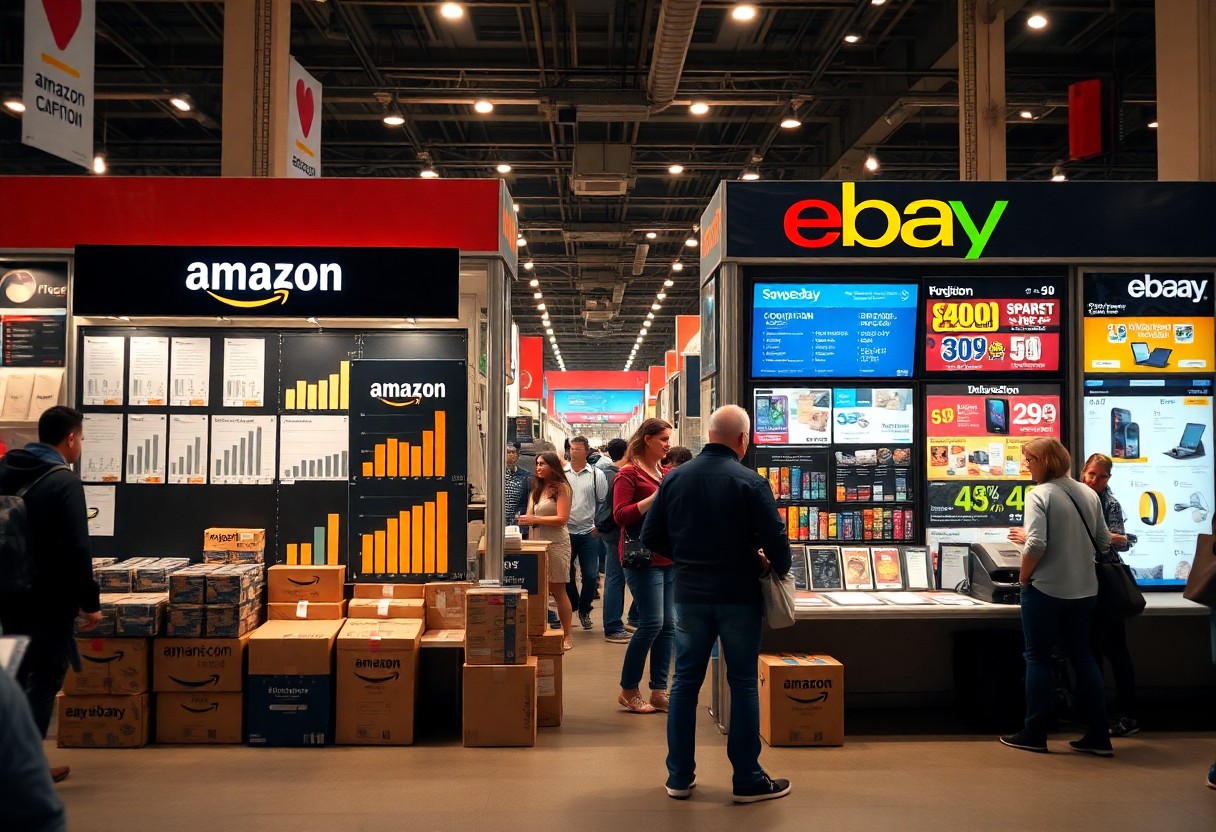
The effectiveness of your selling platform heavily depends on user traffic and where that traffic is coming from. Amazon offers an enormous customer base, with over 300 million active customer accounts, translating into a high volume of daily visitors. eBay, on the other hand, boasts around 182 million active buyers, fostering a different community of users who may be more inclined toward auctions or unique items. Understanding these dynamics can help you optimize your listings and marketing strategies to attract the right audience for your products.
Analyzing Platform Reach and User Demographics
Amazon’s reach is global, tapping into a diverse demographic with varying preferences, while eBay skews toward collectors and vintage enthusiasts, often drawn to eclectic or rare items. This difference means that your target audience will play a significant role in your success on either platform. Leveraging insights into the age, gender, and purchasing habits of users on each platform can guide your marketing efforts and inventory decisions.
Understanding Traffic Sources and Buyer Intent
Traffic sources play a major role in how products are discovered, directly impacting buyer intent. Amazon primarily drives traffic through its search algorithm and product listings, where buyers often have strong purchasing intent, looking for specific items. eBay, conversely, benefits from its auction model, where buyers might be searching for unique or collectible items and may have varied intent, ranging from casual browsing to specific purchases.
On Amazon, customers generally exhibit higher intent to buy upon arrival due to the platform’s algorithm that promotes listings based on product demand and reviews. This means they are often closer to making a purchase decision, so strong product descriptions and feedback become imperative. eBay attracts users seeking deals or unique finds, making engagement tactics like competitive pricing and effective marketing vital for converting curiosity into sales. Understanding these traffic dynamics and buyer psychology can significantly influence your strategies for navigating either platform effectively.
Profit Margins: The Bottom Line
Understanding profit margins is vital for making informed decisions about your e-commerce ventures. While both Amazon FBA and eBay have their unique fee structures, the net profit after selling costs can significantly affect your bottom line. You’ll want to analyze these aspects closely to ensure you’re boosting your income potential.
Comparing Average Profit Margins on Each Platform
Here’s a quick look at the average profit margins for Amazon FBA and eBay, factoring in fees and variable costs:
| Platform | Average Profit Margin |
|---|---|
| Amazon FBA | 15% – 20% |
| eBay | 10% – 25% |
Factors Influencing Profitability beyond Fees
Your actual profitability can vary widely based on several factors aside from fees. Inventory choices, pricing strategies, and even customer service levels can all play a significant role in your financial outcomes. You might find that a lower fee structure doesn’t always equate to higher profits if other elements are not optimized.
- Inventory Turnover Rate
- Market Demand for Your Products
- Quality of Listings and Product Photography
Optimizing these factors can enhance your overall profitability. You might be surprised how adjusting your pricing or improving your product descriptions can boost your sales velocity, thereby impacting your net gains. Consider focusing on high-demand products that align with your expertise to elevate your margins.
- Marketing Strategies Employed
- Customer Loyalty and Retention
- Operational Efficiency in Fulfillment
Investing time in these areas can yield substantial rewards. Knowing your strengths and weaknesses in managing these variables will help you build a sustainable online business, ultimately securing better financial returns over the long term.
Seller Experience: Navigating Each Marketplace
Deciding where to sell your products can significantly impact your overall experience and success as a seller. Both Amazon FBA and eBay offer distinct features, but how easily you can navigate these platforms can influence your buying and selling journey. Analyzing the seller experience involves examining the user interface and considering fulfillment and customer service aspects that come into play on each marketplace.
User Interface and Ease of Use
Amazon FBA provides a streamlined interface that simplifies listing products, managing inventory, and processing orders, making it particularly user-friendly for those willing to invest time in understanding its features. eBay, on the other hand, offers more flexibility with a less structured approach, allowing you to create customized listings, but this can feel overwhelming, especially for beginners. Navigating both platforms may require adjustments, yet they offer tools that cater to different selling strategies.
Fulfillment and Customer Service Considerations
Fulfillment styles are a significant part of each platform’s seller experience. Amazon handles all shipping logistics through its FBA service, enabling you to focus on marketing your products. eBay requires you to manage shipping and returns, which can add complexity to your operations but also grants you more control over customer interactions and experiences.
Understanding the fulfillment differences helps you weigh time and effort against potential profit. With Amazon’s FBA program, you enjoy the benefits of Prime shipping, which can enhance buyer allure and potentially lead to higher sales. eBay, however, allows for personal engagement with customers—building trust and loyalty through tailored communication. Your choice may hinge on whether you value efficiency or relationship-building, as both aspects play critical roles in shaping your seller experience.
Strategic Considerations: Which Platform Fits Your Business Model?
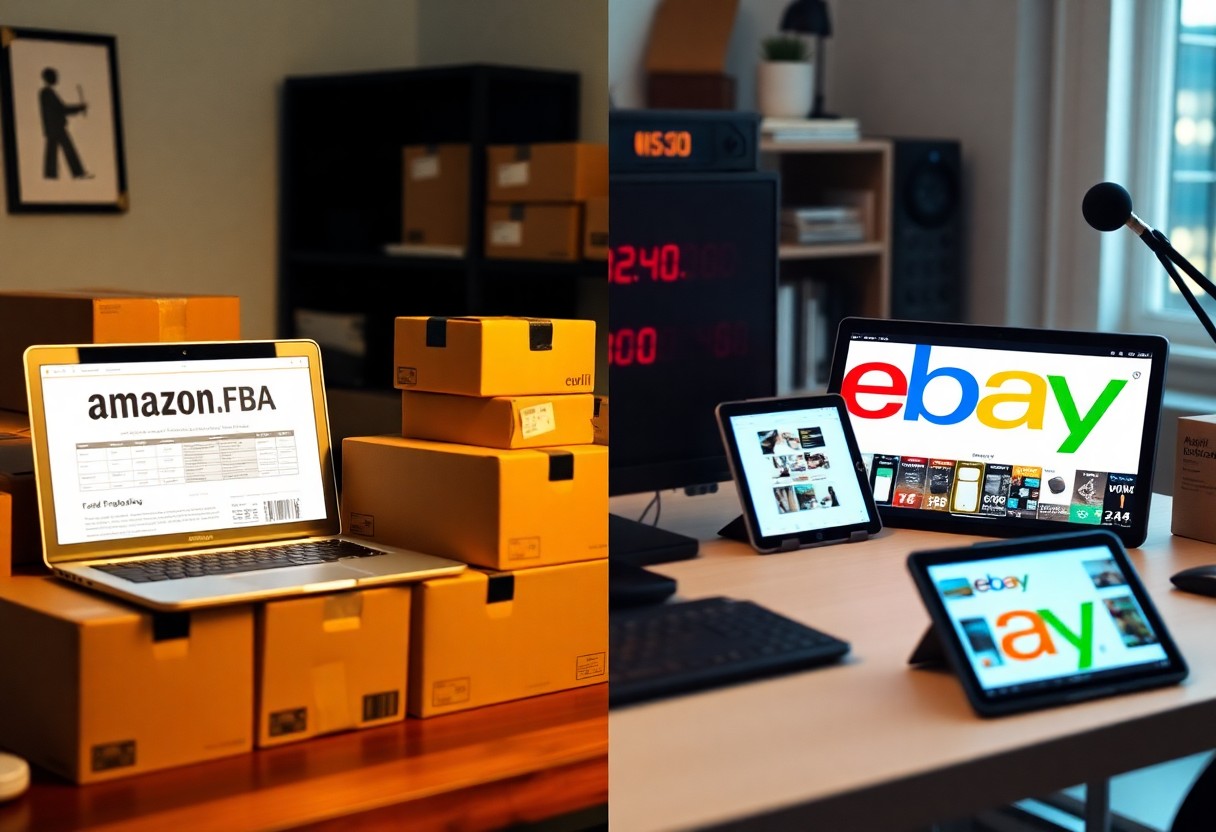
Choosing between Amazon FBA and eBay depends largely on your specific business model and goals. Factors like product type, target audience, and sales strategy come into play as you assess which platform will best align with your objectives. For instance, if your model focuses on high-volume sales with fast turnover, Amazon may be a better fit. Conversely, if you deal in unique or collectible items, eBay’s auction format could offer more advantages.
Evaluating Product Types and Market Trends
Your product type significantly influences which platform is more suitable for you. Researching market trends is key in aligning your offerings with current consumer demands. Regularly evaluate the following:
- Are your products generally high in demand?
- Do your products cater to specific niches or broader markets?
- How seasonal are your products, and how might that affect your sales strategy?
- Are you selling brand-name items that might perform better on one platform?
- What is the price range of your products in relation to marketplace fees?
Assume that distinct product types may flourish better on one platform than the other based on these factors.
| Factor | Amazon |
|---|---|
| Product Type | High demand, mass-produced items |
| Market Trend | Seasonal and trending items often perform well |
| Pricing | More competitive for lower-priced items |
| Brand Recognition | Strong brand loyalty benefits listings |
| Volume of Sales | High-volume sales benefit from FBA services |
Long-term Scalability and Growth Potential
Your long-term scalability hinges on the platform’s ecosystem and customer base. Amazon’s vast audience can facilitate exponential growth, particularly if your products gain traction. eBay’s unique selling environment can also drive revenues, albeit potentially at a slower rate. You might find that Amazon’s fulfillment services streamline operations and nurture growth, while eBay enables personalized connections with niche buyers.
Growth potential also involves considering the evolution of your product lines and the demand for your offerings. If you plan to expand into various product categories, Amazon’s structure may support this transition more efficiently, as it accommodates a wide range of inventory. Additionally, Amazon’s data analytics tools can help you identify trends and optimize your inventory accordingly. In contrast, leveraging eBay might afford you controlled growth through a more curated selection that highlights your brand’s strengths. Each platform presents unique scalability opportunities that you should evaluate in relation to your long-term business strategy.
Conclusion
Upon reflecting, you can see that both Amazon FBA and eBay offer distinct advantages and challenges regarding selling fees, traffic, and profit margins. If you prioritize ease of use and traffic, Amazon FBA might suit your needs better, albeit with higher fees. On the other hand, eBay allows for more flexibility and potentially higher profit margins, but often requires more effort in attracting buyers. Ultimately, your choice should align with your business goals and resources to ensure you maximize your selling potential.
FAQ
Q: What are the selling fees associated with Amazon FBA compared to eBay?
A: Amazon FBA charges a fulfillment fee along with a referral fee based on the category of the product. The fulfillment fee covers storage, picking, packing, and shipping. This can range from $2.50 to over $5.00 per unit depending on size and weight. eBay, on the other hand, has a simpler fee structure, charging a final value fee which is a percentage of the total selling price (including shipping). This fee typically ranges from 10% to 12% depending on the category, plus a small listing fee in some cases.
Q: How does traffic generation differ between Amazon FBA and eBay?
A: Amazon generally has a larger and more consistent traffic flow due to its position as a dominant online marketplace. Products listed on Amazon benefit from a wide range of search functionalities and recommendation systems. In contrast, eBay relies more on auction listings and may require more manual promotion efforts through social media or SEO to drive traffic to individual listings. Sellers on eBay may find they need to invest more in marketing to achieve similar visibility.
Q: Which platform typically offers better profit margins for sellers?
A: Profit margins can vary significantly based on the product type and how sellers manage their costs. Amazon FBA can be profitable for sellers who utilize their fulfillment and logistics effectively but may face higher per-unit costs because of fulfillment fees. eBay can offer higher margins if sellers can manage to keep their costs low and effectively drive traffic to their listings, but competition can influence pricing. Sellers should carefully analyze their specific products and strategies on both platforms to assess profitability.
Q: Are there hidden fees on either platform that sellers should consider?
A: Yes, both Amazon and eBay may have some fees that sellers overlook initially. For Amazon FBA, there can be additional costs, such as long-term storage fees for inventory not sold within a certain period and removal fees for items sellers want to return or dispose of. eBay may impose promotional fees for features like listing upgrades and promoted listings. Sellers should thoroughly review each platform’s fee structure to understand the full cost of selling.
Q: Which platform is better suited for beginners in online selling, Amazon FBA or eBay?
A: The choice for beginners depends on their selling preferences and product types. eBay is often considered more user-friendly for novice sellers, as it allows them to start with lower upfront costs and fewer initial logistics complexities. Amazon FBA, while providing excellent access to a larger customer base, may be more challenging due to the complexities of inventory management and fees. Beginners should evaluate their product offerings and comfort with e-commerce logistics when choosing a platform.
Author


Protocols: An Operating Manual for the Human Body
$29.40 (as of September 19, 2026 07:39 GMT +00:00 – More infoProduct prices and availability are accurate as of the date/time indicated and are subject to change. Any price and availability information displayed on [relevant Amazon Site(s), as applicable] at the time of purchase will apply to the purchase of this product.)
You’re My Little Baby Boo (Board Book for Babies and Toddlers 0-2 years old)
$5.27 (as of September 19, 2026 07:39 GMT +00:00 – More infoProduct prices and availability are accurate as of the date/time indicated and are subject to change. Any price and availability information displayed on [relevant Amazon Site(s), as applicable] at the time of purchase will apply to the purchase of this product.)
Threshing Day (Wing and Claw Collection) (The Empyrean)
$17.48 (as of September 19, 2026 07:39 GMT +00:00 – More infoProduct prices and availability are accurate as of the date/time indicated and are subject to change. Any price and availability information displayed on [relevant Amazon Site(s), as applicable] at the time of purchase will apply to the purchase of this product.)
Paint by Sticker Kids (Official): Halloween: Create 10 Pictures One Sticker at a Time! Includes Glow-in-the-Dark Stickers
$5.21 (as of September 19, 2026 07:39 GMT +00:00 – More infoProduct prices and availability are accurate as of the date/time indicated and are subject to change. Any price and availability information displayed on [relevant Amazon Site(s), as applicable] at the time of purchase will apply to the purchase of this product.)
The Very Hungry Caterpillar
$5.75 (as of September 19, 2026 07:39 GMT +00:00 – More infoProduct prices and availability are accurate as of the date/time indicated and are subject to change. Any price and availability information displayed on [relevant Amazon Site(s), as applicable] at the time of purchase will apply to the purchase of this product.)
The Counterrevolution: The Fall and Rise of Donald Trump and the MAGA Movement
$29.82 (as of September 19, 2026 07:39 GMT +00:00 – More infoProduct prices and availability are accurate as of the date/time indicated and are subject to change. Any price and availability information displayed on [relevant Amazon Site(s), as applicable] at the time of purchase will apply to the purchase of this product.)
Brown Bear, Brown Bear, What Do You See?: 50th Anniversary Edition
$5.36 (as of September 19, 2026 07:39 GMT +00:00 – More infoProduct prices and availability are accurate as of the date/time indicated and are subject to change. Any price and availability information displayed on [relevant Amazon Site(s), as applicable] at the time of purchase will apply to the purchase of this product.)
The Altar of Pergamon: The Mystery of the Dark Angel and the Future of the World
$21.48 (as of September 19, 2026 07:39 GMT +00:00 – More infoProduct prices and availability are accurate as of the date/time indicated and are subject to change. Any price and availability information displayed on [relevant Amazon Site(s), as applicable] at the time of purchase will apply to the purchase of this product.)
Swan Song: Diana, my sister
$24.50 (as of September 19, 2026 07:39 GMT +00:00 – More infoProduct prices and availability are accurate as of the date/time indicated and are subject to change. Any price and availability information displayed on [relevant Amazon Site(s), as applicable] at the time of purchase will apply to the purchase of this product.)




Leave a Reply