
Yesteryear: A GMA Book Club Pick: A Novel
$14.99 (as of September 19, 2026 07:39 GMT +00:00 – More infoProduct prices and availability are accurate as of the date/time indicated and are subject to change. Any price and availability information displayed on [relevant Amazon Site(s), as applicable] at the time of purchase will apply to the purchase of this product.)
Brown Bear, Brown Bear, What Do You See?: 50th Anniversary Edition
$5.36 (as of September 19, 2026 07:39 GMT +00:00 – More infoProduct prices and availability are accurate as of the date/time indicated and are subject to change. Any price and availability information displayed on [relevant Amazon Site(s), as applicable] at the time of purchase will apply to the purchase of this product.)
Lost in Space: 5,000 Facts for Navigating the Universe
$35.00 (as of September 19, 2026 07:39 GMT +00:00 – More infoProduct prices and availability are accurate as of the date/time indicated and are subject to change. Any price and availability information displayed on [relevant Amazon Site(s), as applicable] at the time of purchase will apply to the purchase of this product.)
A Court of Forgotten Melody: The Valkyrie Cycle, Movements II & III (A Court of Thorns and Roses, 7)
$26.60 (as of September 19, 2026 07:39 GMT +00:00 – More infoProduct prices and availability are accurate as of the date/time indicated and are subject to change. Any price and availability information displayed on [relevant Amazon Site(s), as applicable] at the time of purchase will apply to the purchase of this product.)
Whistler: A Novel
$14.99 (as of September 19, 2026 07:39 GMT +00:00 – More infoProduct prices and availability are accurate as of the date/time indicated and are subject to change. Any price and availability information displayed on [relevant Amazon Site(s), as applicable] at the time of purchase will apply to the purchase of this product.)In today’s digital landscape, mobile apps have become an indispensable tool for businesses to reach their customers, streamline operations, and stay ahead of the competition. As someone interested in building a career in this field, you’re likely wondering what it takes to succeed in app development. The good news is that the demand for skilled app developers is on the rise, and with the right skills and knowledge, you can unlock a world of opportunities. In this post, we’ll examine into the world of app development careers, exploring the different roles, skills, and strategies you need to develop mobile apps that drive business success.
Key Takeaways:
- In-Demand Skills: Knowledge of programming languages such as Java, Swift, and Kotlin, as well as proficiency in development frameworks like React Native and Flutter, are highly sought after in the app development industry.
- Business Acumen: To develop successful mobile apps for businesses, it’s crucial to have a solid understanding of business operations, market trends, and customer needs, allowing developers to create apps that meet specific business goals.
- Cross-Platform Development: With the increasing use of different devices and platforms, developers should be able to create apps that can seamlessly run on both iOS and Android, as well as on various devices, including smartphones, tablets, and wearables.
- User Experience (UX) Design: A well-designed user interface and user experience are critical components of a successful mobile app. Developers should focus on creating intuitive, visually appealing, and user-friendly apps that meet the needs of their target audience.
- Continuous Learning: The app development landscape is constantly evolving, with new technologies, frameworks, and tools emerging regularly. To stay ahead in the industry, developers must commit to ongoing learning and professional development, staying up-to-date with the latest trends and advancements.
The Rise of Mobile Apps in Business
For businesses, having a mobile presence is no longer a luxury, but a necessity. The rise of mobile apps has revolutionized the way companies operate, interact with customers, and ultimately, drive revenue.
The growing demand for mobile apps
Businesses of all sizes are recognizing the importance of having a mobile app to stay competitive in today’s digital landscape. As a result, the demand for mobile apps is skyrocketing, with companies seeking to leverage the power of mobile technology to reach their target audience, increase engagement, and boost sales.

How mobile apps are transforming businesses
With the ability to provide personalized experiences, streamline operations, and facilitate real-time communication, mobile apps are transforming the way businesses operate and interact with customers. By putting the power of mobile technology in the hands of customers and employees, companies can unlock new revenue streams, improve efficiency, and gain a competitive edge.
Another significant advantage of mobile apps is their ability to provide valuable insights and data. By leveraging analytics and tracking user behavior, businesses can gain a deeper understanding of their customers’ needs, preferences, and pain points, allowing them to refine their strategies, optimize their operations, and make data-driven decisions. As you explore the world of app development careers, it’s vital to recognize the transformative power of mobile apps and how they can help businesses thrive in today’s fast-paced digital economy.
Types of App Development Careers
Some of the most in-demand careers in app development include:
- Native App Developers
- Cross-Platform App Developers
- Hybrid App Developers
- Progressive Web App Developers
- Full-Stack App Developers
Knowing which type of app development career is right for you can be a crucial step in your journey.
| Native App Development | Develops apps for a specific mobile platform (e.g., iOS or Android) |
| Cross-Platform App Development | Develops apps that can run on multiple mobile platforms |
| Hybrid App Development | Combines elements of native and web development to create apps |
| Progressive Web App Development | Creates web applications that provide a native app-like experience |
| Full-Stack App Development | Develops apps from front-end user interface to back-end infrastructure |
Native App Development
Natively, mobile apps are built using platform-specific programming languages and tools. As a native app developer, you’ll specialize in developing apps for a specific mobile platform, such as iOS or Android.
Cross-Platform App Development
Any developer can attest that building separate apps for different platforms can be a daunting task. Cross-platform app development allows you to create apps that can run on multiple mobile platforms, reducing development time and costs.
The ability to share code across platforms makes cross-platform development an attractive option for businesses looking to reach a wider audience. With the right tools and frameworks, you can create apps that provide a seamless user experience across different devices and platforms.
Hybrid App Development
The hybrid approach combines the best of both worlds, leveraging web technologies to build apps that can run on multiple platforms. As a hybrid app developer, you’ll use frameworks like React Native or Ionic to create apps that provide a native-like experience.
A key benefit of hybrid app development is the ability to reuse code and reduce development time. By using web technologies, you can also tap into a larger pool of developers and resources, making it easier to find talent and support.
Progressive Web App Development
Types of apps that provide a native app-like experience, but are built using web technologies, are known as progressive web apps. As a progressive web app developer, you’ll create apps that can run offline, send push notifications, and provide a seamless user experience.
Plus, progressive web apps can be easily discovered and installed by users, making them an attractive option for businesses looking to increase engagement and conversion rates. With the right skills and knowledge, you can create progressive web apps that rival native apps in terms of performance and functionality.
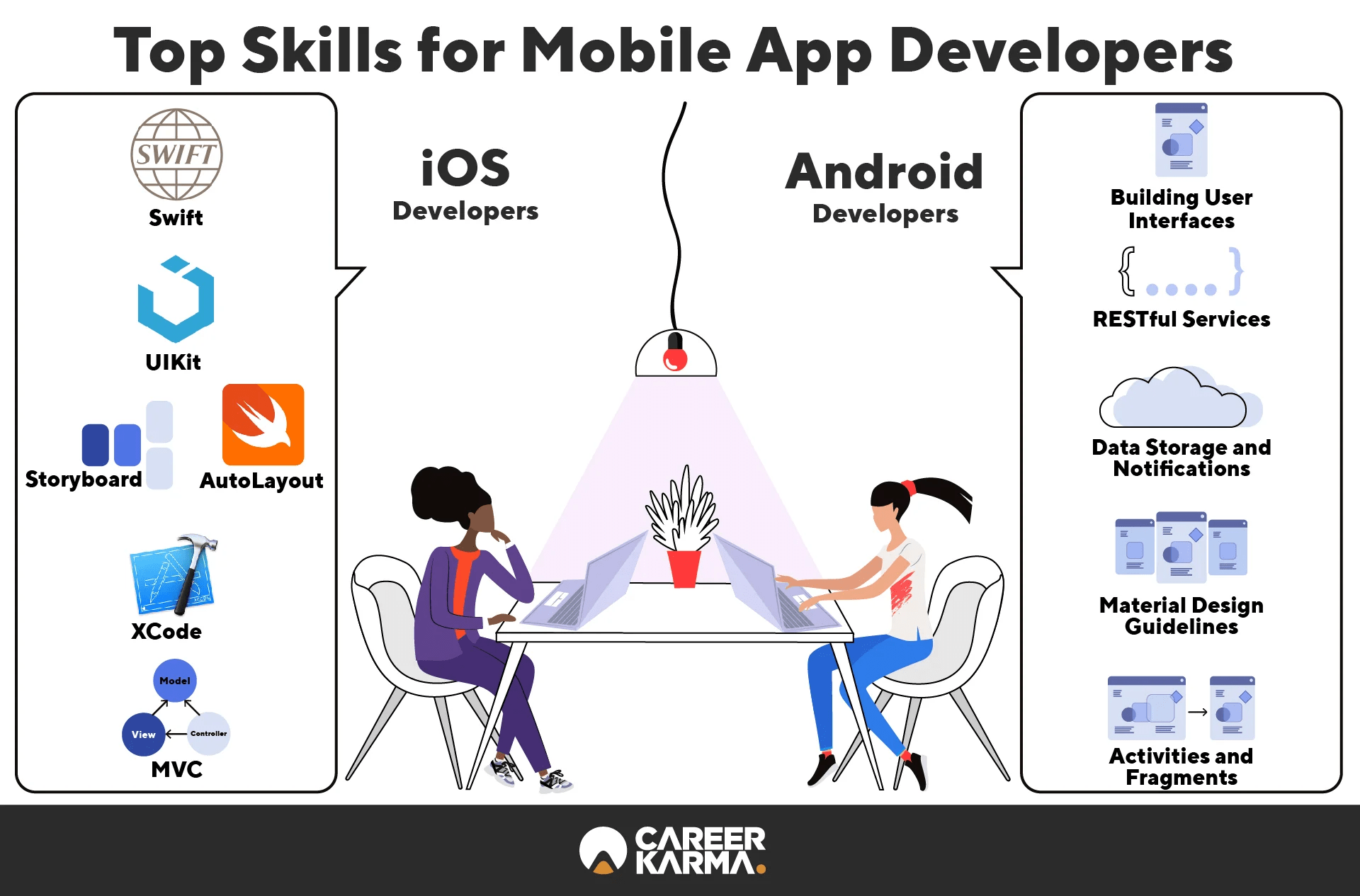
Key Skills for App Developers
Now that you’re considering a career in app development, it’s necessary to understand the key skills required to succeed in this field.
Programming languages (Java, Swift, Kotlin, etc.)
Languages like Java, Swift, and Kotlin are the backbone of app development. You’ll need to be proficient in at least one of these languages to build a mobile app from scratch.
Development frameworks and tools (React Native, Flutter, etc.)
Skills in development frameworks and tools like React Native, Flutter, and Xamarin are crucial for building cross-platform apps efficiently.
A significant advantage of using these frameworks is that they allow you to build apps for multiple platforms, including iOS and Android, using a single codebase. This means you can reach a broader audience with less development effort.
Database management and integration
Tools like MySQL, MongoDB, and Firebase are necessary for storing and managing data in your app. You’ll need to understand how to design, implement, and integrate databases into your app.
Understanding how to optimize database performance, ensure data security, and integrate with APIs will help you build scalable and efficient apps.
User experience (UX) and user interface (UI) design
For a mobile app to be successful, it needs to provide an intuitive and engaging user experience. You’ll need to have a good understanding of UX principles and UI design patterns to create an app that users will love.
React to user feedback, conduct usability testing, and iterate on your design to create an app that meets the needs of your target audience. By focusing on UX and UI, you can increase user engagement, retention, and ultimately, drive business success.
Career Paths in App Development
Not surprisingly, the demand for mobile app developers is on the rise, and according to Mobile Application Development Careers, it’s one of the top skills in demand. As you consider a career in app development, you’ll find various paths to explore, each with its own set of responsibilities and requirements.
Junior App Developer
An entry-level position, junior app developers assist in the design, development, and testing of mobile applications. You’ll work under the guidance of senior developers, honing your skills in programming languages like Java, Swift, or Kotlin, and learning about different development frameworks and tools.
Senior App Developer
With years of experience under your belt, senior app developers take on more complex projects, leading the development process from start to finish. You’ll be responsible for designing, developing, and deploying mobile apps, as well as mentoring junior developers and ensuring high-quality code.
Developer expertise is crucial at this level, as you’ll need to stay up-to-date with the latest technologies and trends. You’ll also be involved in making key technical decisions, troubleshooting issues, and collaborating with cross-functional teams.

App Development Team Lead
On top of their technical skills, app development team leads possess strong leadership and communication abilities. You’ll oversee a team of developers, guiding them through project timelines, resource allocation, and performance evaluations.
To excel in this role, you’ll need to balance technical expertise with management skills, ensuring that your team delivers high-quality products while meeting business objectives. You’ll also be responsible for identifying areas for improvement and implementing process changes to increase efficiency.
App Development Project Manager
Development of mobile apps involves more than just coding; it requires effective project management. As an app development project manager, you’ll be responsible for planning, coordinating, and delivering projects on time, within budget, and to the required quality standards.
Plus, you’ll need to communicate effectively with stakeholders, including clients, developers, and designers, to ensure that everyone is aligned with project goals and objectives. Your organizational skills will be put to the test as you manage competing priorities, resources, and timelines.
Industry Trends and Opportunities
Many exciting developments are shaping the app development industry, creating new opportunities for you to build a successful career.
Emerging technologies (AR, VR, AI, etc.)
For instance, augmented reality (AR) and virtual reality (VR) are transforming the way businesses interact with customers, while artificial intelligence (AI) is enhancing app functionality and user experience. As these technologies continue to evolve, you’ll have the chance to work on innovative projects that push the boundaries of what’s possible.
Growing industries (healthcare, finance, etc.)
Trends in healthcare, finance, and other industries are driving demand for custom mobile apps that meet specific business needs. These industries require specialized knowledge and expertise, making them a great fit for app developers who want to focus on a particular domain.
Another area of growth is in the healthcare industry, where mobile apps are being used to improve patient outcomes, streamline clinical workflows, and enhance patient engagement. As healthcare providers continue to adopt mobile technology, you’ll have opportunities to develop apps that make a real difference in people’s lives.
Freelance and entrepreneurial opportunities
The rise of the gig economy and online platforms has made it easier than ever for you to work as a freelance app developer or start your own business. With the ability to work remotely and collaborate with clients from around the world, you’ll have the freedom to choose projects that align with your interests and goals.
A key benefit of freelancing or entrepreneurship is the ability to diversify your income streams and take on multiple projects simultaneously. This can help you build a more stable financial foundation and increase your earning potential over time.
Remote work and flexible arrangements
Technologies like video conferencing tools and project management software have made remote work a viable option for app developers. As a result, you’ll have more flexibility to choose where and when you work, allowing you to achieve a better work-life balance.
Remote work arrangements also open up opportunities for you to work with clients or companies based in different locations, giving you access to a global market and a wider range of projects to choose from.
Education and Training
Unlike other careers, app development requires a unique blend of technical skills, creativity, and business acumen. To succeed in this field, you’ll need to invest time and effort in developing your skills and staying up-to-date with the latest trends and technologies.
Formal education (degrees and certifications)
Any aspiring app developer can benefit from formal education, such as a degree in computer science, information technology, or a related field. Additionally, certifications like Apple Developer Certification or Google Developers Certification can demonstrate your expertise and commitment to potential employers.

Online courses and tutorials
Formal education is not the only way to learn app development. Online courses and tutorials offer a flexible and affordable way to acquire new skills, such as programming languages, design principles, and development frameworks.
Education platforms like Udemy, Coursera, and edX provide access to a vast array of courses and tutorials, often taught by industry experts. You can learn at your own pace, anytime, and anywhere, making it an ideal option for those with busy schedules or limited budgets.
Bootcamps and workshops
Courses like General Assembly, App Academy, and Hack Reactor offer immersive bootcamps and workshops that provide hands-on experience and mentorship from experienced developers.
With these programs, you’ll have the opportunity to work on real-world projects, receive feedback from instructors, and network with like-minded individuals. This type of training can help you build a portfolio of work, gain confidence in your skills, and make valuable connections in the industry.
Self-study and continuous learning
Online resources like blogs, podcasts, and YouTube channels offer a wealth of information on app development, from beginner tutorials to advanced topics.
To stay ahead in this field, you’ll need to commit to continuous learning, staying up-to-date with the latest trends, technologies, and best practices. By dedicating time to self-study and experimentation, you’ll be able to refine your skills, explore new areas of interest, and remain competitive in the job market.
Summing up
Following this journey into the world of app development careers, you now possess a deeper understanding of the opportunities and challenges that come with developing mobile apps for businesses. You’ve seen how your skills can be leveraged to create innovative solutions that drive growth and improvement. As you begin on your own path, remember that the demand for talented app developers is high, and with dedication and persistence, you can build a rewarding career that brings value to businesses and users alike.
FAQ
Q: What are the key skills required to become a successful mobile app developer for businesses?
A: To become a successful mobile app developer for businesses, you’ll need a combination of technical and soft skills. Technical skills include proficiency in programming languages such as Java, Swift, or Kotlin, as well as experience with development frameworks like React Native or Flutter. Additionally, knowledge of database management, API integration, and cloud computing is crucial. Soft skills like communication, project management, and problem-solving are also crucial to work effectively with clients and teams. Furthermore, staying up-to-date with the latest industry trends, technologies, and best practices is vital to remain competitive in the field.
Q: What are the different types of mobile app development careers available for businesses?
A: There are several types of mobile app development careers available for businesses, including native app developers, cross-platform developers, mobile UX/UI designers, quality assurance (QA) engineers, and DevOps engineers. Native app developers specialize in developing apps for specific platforms like iOS or Android. Cross-platform developers create apps that can run on multiple platforms using frameworks like React Native or Flutter. Mobile UX/UI designers focus on creating user-friendly and visually appealing interfaces. QA engineers test and ensure the app’s quality, while DevOps engineers oversee the app’s deployment and maintenance.
Q: How do I get started with a career in mobile app development for businesses?
A: To get started with a career in mobile app development for businesses, begin by acquiring the necessary technical skills through online courses, boot camps, or degree programs. Gain practical experience by building personal projects or contributing to open-source projects. Create a portfolio showcasing your work to attract potential employers. Network with professionals in the industry through attending conferences, meetups, or online forums. Consider obtaining certifications like Google Developers Certification or Apple Developer Certification to demonstrate your expertise. Finally, stay updated with industry trends and best practices to increase your chances of getting hired.
Q: What are the benefits of developing mobile apps for businesses?
A: Developing mobile apps for businesses offers several benefits, including increased customer engagement, improved brand visibility, and enhanced customer experience. Mobile apps provide businesses with a direct channel to interact with customers, offer personalized services, and collect valuable feedback. They also enable businesses to stay competitive in their respective markets, increase revenue through in-app purchases or advertising, and streamline internal operations. Moreover, mobile apps can help businesses collect data and analytics to inform business decisions and drive growth.
Q: What is the average salary range for mobile app developers working with businesses?
A: The average salary range for mobile app developers working with businesses varies based on factors like location, experience, and specific job roles. However, according to industry reports, the average salary range for mobile app developers in the United States is between $100,000 and $150,000 per year. Senior-level positions or specialized roles like DevOps engineers or mobile UX/UI designers can command higher salaries, up to $200,000 or more per year. Freelance mobile app developers or those working with startups may earn lower salaries, but can still expect to earn a minimum of $60,000 to $80,000 per year.
Author

Lost in Space: 5,000 Facts for Navigating the Universe
$35.00 (as of September 19, 2026 07:39 GMT +00:00 – More infoProduct prices and availability are accurate as of the date/time indicated and are subject to change. Any price and availability information displayed on [relevant Amazon Site(s), as applicable] at the time of purchase will apply to the purchase of this product.)
I Love You to the Moon and Back
$4.40 (as of September 19, 2026 07:39 GMT +00:00 – More infoProduct prices and availability are accurate as of the date/time indicated and are subject to change. Any price and availability information displayed on [relevant Amazon Site(s), as applicable] at the time of purchase will apply to the purchase of this product.)
Swan Song: Diana, my sister
$24.50 (as of September 19, 2026 07:39 GMT +00:00 – More infoProduct prices and availability are accurate as of the date/time indicated and are subject to change. Any price and availability information displayed on [relevant Amazon Site(s), as applicable] at the time of purchase will apply to the purchase of this product.)
You’re My Little Baby Boo (Board Book for Babies and Toddlers 0-2 years old)
$5.27 (as of September 19, 2026 07:39 GMT +00:00 – More infoProduct prices and availability are accurate as of the date/time indicated and are subject to change. Any price and availability information displayed on [relevant Amazon Site(s), as applicable] at the time of purchase will apply to the purchase of this product.)
Protocols: An Operating Manual for the Human Body
$29.40 (as of September 19, 2026 07:39 GMT +00:00 – More infoProduct prices and availability are accurate as of the date/time indicated and are subject to change. Any price and availability information displayed on [relevant Amazon Site(s), as applicable] at the time of purchase will apply to the purchase of this product.)
The Perilous Fight
$26.95 (as of September 19, 2026 07:39 GMT +00:00 – More infoProduct prices and availability are accurate as of the date/time indicated and are subject to change. Any price and availability information displayed on [relevant Amazon Site(s), as applicable] at the time of purchase will apply to the purchase of this product.)
You’re My Little Baby Boo (Board Book for Babies and Toddlers 0-2 years old)
$5.27 (as of September 19, 2026 07:39 GMT +00:00 – More infoProduct prices and availability are accurate as of the date/time indicated and are subject to change. Any price and availability information displayed on [relevant Amazon Site(s), as applicable] at the time of purchase will apply to the purchase of this product.)
Theo of Golden: A Novel
$12.99 (as of September 19, 2026 07:39 GMT +00:00 – More infoProduct prices and availability are accurate as of the date/time indicated and are subject to change. Any price and availability information displayed on [relevant Amazon Site(s), as applicable] at the time of purchase will apply to the purchase of this product.)
Protocols: An Operating Manual for the Human Body
$29.40 (as of September 19, 2026 07:39 GMT +00:00 – More infoProduct prices and availability are accurate as of the date/time indicated and are subject to change. Any price and availability information displayed on [relevant Amazon Site(s), as applicable] at the time of purchase will apply to the purchase of this product.)




Leave a Reply